
In a bid to promote the use of domestic currency for cross-border settlements, the Reserve Bank on Wednesday announced a slew of measures, including allowing banks to lend in Indian Rupees to non-residents from Bhutan, Nepal and Sri Lanka for bilateral trade.

Among Sensex shares, Adani Ports, Reliance Industries, Infosys, ICICI Bank, Eternal, BEL, HDFC Bank, Power Grid, ITC and Sun Pharmaceutical were the major laggards. However, Titan, Maruti, Trent, Bharti Airtel, Bajaj Finance, Tech Mahindra, State Bank of India, L&T, HCL Technologies and NTPC were among the gainers.
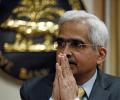
Uncertainty is emerging as the only certainty, said RBI Governor Shaktikanta Das as he emphasised on continued policy support at the December MPC meet during which members expressed concerns over spread of the Omicron variant of coronavirus, as per the minutes of the rate-setting panel released on Wednesday. After three days of deliberations, the six members of the Monetary Policy Committee (MPC) on December 8 unanimously voted for status quo on policy rates for the ninth consecutive time. At the meeting, the RBI Governor said risks stalking the global economy have amplified with rapid spread of the virus mutations, including the Omicron variant, leading to countries scrambling for restrictions.

The government on Monday appointed three eminent economists Ashima Goyal, Jayanth R Varma and Shankanka Bhide as members of the rate-setting Monetary Policy Committee of the RBI

While participants in the domestic financial market are expecting a 25 basis-point policy repo rate cut in the December meeting of the Monetary Policy Committee (MPC) of the Reserve Bank of India (RBI), economists remain torn between a reduction in rate cut and a pause.

Retail inflation eased to a nearly six-year low of 3.16 per cent in April mainly due to subdued prices of vegetables, fruits, pulses, and other protein-rich items, creating enough room for the Reserve Bank to go for another round of rate cut in the June monetary policy review. The Consumer Price Index (CPI) based inflation was 3.34 per cent in March and 4.83 per cent in April 2024. It was 3.15 per cent in July 2019.

Indian corporates collectively raised over Rs 17,500 crore from the domestic debt capital market through bond issuances on Tuesday. The issuances were led by Bharti Telecom's Rs 10,500 crore fundraise in two tranches, the largest by an Indian company in the domestic market so far in FY26.
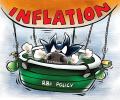
The Reserve Bank of India (RBI) has projected retail inflation at 4.2 percent for the next financial year beginning April while retaining the forecast for 2024-25 at 4.8 percent. The central bank attributed the expected easing of inflation to good kharif production, winter-easing in vegetable prices and favorable rabi crop prospects. However, the RBI also noted that continued uncertainty in global financial markets coupled with volatility in energy prices and adverse weather events presents upside risks to the inflation trajectory.

Gold prices surged Rs 2,200 to hit a fresh peak of Rs 116,200 per 10 grams in the national capital on Monday buoyed by strong global cues as investors awaited key commentary from US Fed officials for policy direction. According to the All India Sarafa Association, the precious metal of 99.9 per cent purity had closed at Rs 1,14,000 per 10 grams on Friday.

Among Sensex scrips, Bharti Airtel, Titan, NTPC, State Bank of India, ITC, Tata Steel, Mahindra & Mahindra and Tata Motors were the major laggards. Adani Ports, Infosys, Axis Bank, HCL Technologies, Tech Mahindra and IndusInd Bank were among the gainers.

The Asian Development Bank (ADB) on Wednesday lowered India's growth forecast for FY26 to 6.5 per cent from 6.7 per cent on account of trade uncertainty and higher US tariffs that are expected to impact exports and investment. Despite the downward revision from the April 2025 Asian Development Outlook (ADO), India remains one of the fastest-growing major economies in the world.

From the Sensex firms, Tata Motors jumped the most by 5.54 per cent, followed by Kotak Mahindra Bank, Trent, Sun Pharma, Axis Bank, and ICICI Bank. However, Bajaj Finance, State Bank of India, UltraTech Cement and Tata Steel were among the laggards.

The Indian government has expressed its disagreement with the IMF staff's 'baseline' assumption that the 50 per cent US tariffs on its goods exports 'would remain in place indefinitely', based on which the staff pegged the country's GDP growth at 6.6 per cent this year, and pared its 2026-27 projection by 20 basis points to 6.2 per cent.

'I think today RBI supervision is much sharper than what it was earlier.'

Maruti, IndusInd Bank, Bajaj Finserv, Eternal, Mahindra & Mahindra, Tata Steel, Kotak Mahindra Bank, Titan, HDFC Bank, and NTPC were among the other major gainers. Bharti Airtel and Sun Pharma were the laggards.

The Reserve Bank of India (RBI) on Tuesday announced a fresh round of liquidity measures through open-market operations (OMOs) and a foreign exchange buy-sell swap, under which it will inject close to Rs 3 trillion into the banking system. The central bank said it would purchase Government of India securities worth Rs 2 trillion through OMOs, spread across four tranches of Rs 50,000 crore each to be conducted on December 29, January 5, January 12 and January 22.

The Reserve Bank of India on Thursday decided to keep the policy rate unchanged for the ninth time in a row, saying food inflation remains stubborn. The rate increase cycle was paused in April last year after six consecutive rate hikes, aggregating to 250 basis points since May 2022.
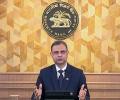
Reserve Bank will "wait and watch" the evolving situation before deciding on any further rate cut, Governor Sanjay Malhotra has said as he emphasised that both growth and price stability are equally important. With inflation on a downward trend, the RBI's Monetary Policy Committee (MPC) has been reducing the benchmark repo rate and has adopted a neutral stance, which also gives the flexibility to either cut or hike the rate going forward. The central bank has cummulatively reduced the repo rate by 100 basis points since February.
From the Sensex firms, Tata Steel, Eternal, Tech Mahindra, Maruti, Mahindra & Mahindra, Infosys, IndusInd Bank, HCL Tech, Tata Consultancy Services and Bharti Airtel were the major gainers. Telecom operator Bharti Airtel climbed nearly 1 per cent after it posted about a five-fold jump in consolidated net profit to Rs 11,022 crore in the March 2025 quarter, mainly due to the tariff hike impact and one-time gain on tax benefits. However, Asian Paints, Tata Motors, Kotak Mahindra Bank, NTPC and Power Grid were among the laggards.
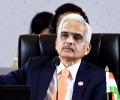
Reserve Bank Governor Shaktikanta Das on Friday said that this stage would have been "premature" and "very very risky" as the retail inflation is still high, and future monetary policy action would depend upon the income data and outlook. Earlier this month, the RBI continued to maintain the status quo in the short-term lending interest rate (repo), citing inflationary concerns, though it changed the monetary policy stance to neutral.
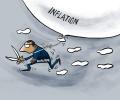
Most members of the Reserve Bank of India's monetary policy committee (MPC) decided to stick to the course on bringing retail inflation to the target of 4 per cent while voting for maintaining status quo in the April review, except external member Jayanth Varma who voted for a 25 bps cut in the repo rate. "I believe that the extant monetary policy setting is well positioned," RBI governor Shaktikanta Das said in the minutes of the policy review, which came out on Friday. "Monetary policy transmission is continuing and inflation expectations of households are also getting further anchored.

Retail inflation in August rose slightly to 2.07 per cent from 1.61 per cent in the preceding month, mainly due to increase in prices of vegetables, meat and fish, according to a government data released on Friday.

Among the 30 Sensex firms, Asian Paints, Infosys, JSW Steel, UltraTech Cement, Power Grid, Larsen & Toubro, HCL Technologies and Tata Steel were the biggest laggards. Tata Motors, HDFC Bank, Bharti Airtel, ITC, IndusInd Bank and Axis Bank were the gainers.

India has managed high government debt-to-GDP, a slowing domestic revenue engine, lower household savings and a more hostile geopolitical environment separately in the past. But together, they threaten to undo the growth narrative on which today's optimism rests, warns Debashis Basu.
The weakening of inflation, prospects of economic growth, geopolitical uncertainty and comfortable system liquidity may result in the Reserve Bank of India's (RBI) Monetary Policy Committee (MPC) to cut the repo rate by another 25 basis points, opine top economists. They also said the external economic pressures like trade policies and others would require continued RBI's accommodative stance and policy support for the Indian industry to sustain the growth.
The RBI on Wednesday slashed key interest rate by 25 basis points, for the second time in a row, to support a shuttering economy hit by reciprocal tariffs imposed by the US. Following the rate cut, the key policy rate eased to 6 per cent providing relief to home, auto and corporate loan borrowers.

Global rating Moody's on Monday affirmed India's long-term local and foreign-currency issuer ratings and the local-currency senior unsecured rating at 'Baa3' with a 'stable' outlook on the back of robust economic growth and sound external position. The rating agency also affirmed India's other short-term local-currency rating at P-3.

The Indian economy is likely to grow at 7.4 per cent in 2025-26, up from 6.5 per cent in the previous fiscal, mainly on account of better performance of manufacturing and services sectors, as per the government data released on Wednesday.
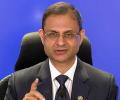
'We will be very, very proactive in providing whatever liquidity requirements are needed.'
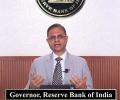
'India has the potential to grow at more than 7%, with the monetary policy providing a supportive hand.'

Reserve Bank of India (RBI)Governor Sanjay Malhotra on Friday said it was not the regulator's job to take decisions for bank boards, speaking in the context of the wide range of enabling reforms announced for lenders during the October monetary policy review, and emphasised that financial stability remained the regulator's focus.

Deputy Governor Michael Patra warned about the spillover effects of food inflation.
The Reserve Bank of India (RBI) is expected to cut interest rates for the first time in nearly five years in Governor Sanjay Malhotra's first monetary policy committee (MPC) meeting on Wednesday. The meeting of the six-member MPC, which will culminate on Friday, aims to boost sluggish economic growth, which is seen falling to a four-year low. Malhotra took charge as the 26th RBI governor in December last year.

'The statistical confidence bands of the fan charts of the forecasts will provide a better sense of the potential variability of outcomes.'

Indian economy is in a sweet spot, with a mix of solid growth and moderating inflation, Moody's Ratings said, forecasting a 7.2 per cent GDP growth in the 2024 calendar year and 6.6 per cent in the next. In its Global Macro Outlook 2025-26, the rating agency said the global economy has shown remarkable resilience in bouncing back from supply chain disruptions during the pandemic, an energy and food crisis after the Russia-Ukraine war began, high inflation and consequent monetary policy tightening.

Plans for big bang reforms in the GST regime by Diwali, the Putin-Trump summit and S&P upgrading India's sovereign credit rating are likely to instil optimism in the domestic equity market in the week ahead, analysts said. Besides, trends in global markets and the trading activity of foreign investors would also impact domestic investors' sentiment.

Wholesale price inflation dropped to 0.85 per cent in April as prices of food articles, manufactured products, and fuel eased, government data showed on Wednesday. WPI-based inflation was 2.05 per cent in March. It was 1.19 per cent in April last year.

'Once bitten, twice shy, I didn't take up the challenge this time...' 'I realised I had failed to follow my karma because I feared failure.'

State Bank of India, Adani Ports, Tata Consultancy Services, ICICI Bank, Reliance Industries and PowerGrid were also among the laggards.

S&P Global Ratings on Tuesday said the Indian economy is set for "resilient growth" in 2025 and projected inflation pressure to recede which will lead to "modest" easing of the monetary policy by the RBI. In its India outlook for 2025, S&P also retained India's growth forecast for current fiscal at 6.8 per cent, followed by 6.9 per cent growth in 2025-26.
